Every self-custody tool in the directory. Filter by category or search by name.
205 self-custody tools / page 6 of 6
Software Wallets
Self-custodial Bitcoin wallet from ACINQ that uses Lightning to send and receive payments, with channel management handled automatically for the user.
Privacy & Coinjoin
A non-custodial mobile marketplace for buying and selling Bitcoin peer-to-peer without KYC, available on iOS, Android and as a direct APK download.
Node Software
A modular Lightning implementation supplied as libraries rather than a daemon, so wallets and applications can embed Lightning with their own storage, chain source and key management.
Self-custodial Bitcoin and Lightning wallet aimed at simple payments, including free contact-to-contact transfers and cross-border settlement.
Node Hardware
A preassembled Bitcoin full node sold by Bitcoin Merch with up to 2TB of storage, marketed as plug-and-play private Bitcoin infrastructure and often paired with home lottery miners.
The reference Rust implementation of payjoin, packaged as libraries so wallets and payment processors can add sender and receiver support without writing the protocol from scratch.
One of the oldest Android Bitcoin wallets, run as a standalone SPV node with no centralised backend. Open source and maintained on GitHub.
Open-source multicoin wallet from Cypher Stack covering Bitcoin alongside Monero, Litecoin and others, with keys held locally by the user.
A dedicated Bitcoin and Lightning node appliance from nodl, sold with 2TB of storage. nodl is a European maker that builds node hardware and runs related network infrastructure.
The free, open-source edition of MyNode's node software. It installs on a range of devices and includes nearly all MyNode features for running Bitcoin and Lightning at home.
A peer-to-peer channel rebalancing protocol and plugin for Core Lightning and LND that swaps Lightning balance against on-chain Bitcoin or Liquid with a direct channel peer.
The top-of-range node device in nodl's shop, sold as a limited Founders' Edition. It is aimed at users who want a high-specification, prebuilt Bitcoin and Lightning node.
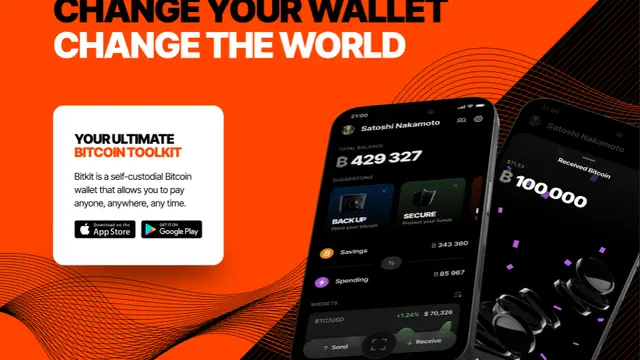
Self-custodial mobile Bitcoin and Lightning wallet from Synonym, built for fast everyday payments while the user holds the keys.
Hardware Wallets
SecuX's NFT-focused hardware wallet, built around a large touchscreen for viewing and approving collectible transactions while keys stay in the device's secure element.
An open-source Lightning node implementation built on LDK that can host multiple nodes from a single process, aimed at making it easier for anyone to run Lightning.
Blockstream's open-source block explorer for Bitcoin and Liquid, with a REST API that many wallets use as a backend. It can be self-hosted against your own node.
A firewall for Lightning routing nodes that limits the number of in-flight HTLCs from each peer, protecting a node against channel jamming and slot exhaustion.
A Bitcoin implementation and library suite written in Scala, providing node, wallet, DLC and cryptographic components that other applications can build on.
A non-custodial peer-to-peer Bitcoin trading platform. Trades settle through multisig escrow contracts, so the platform states it never holds user funds.
A policy-based fee manager for LND that sets channel fees automatically from rules such as channel activity, on-chain fee levels, or a target balance.
nodl's second-generation node appliance for running a Bitcoin full node and Lightning node at home, listed on the nodl shop in several configurations.
A command-line toolkit for LND node operators covering rebalancing, fee management, channel analysis, reporting and many other routing-node chores.
A model in Blockstream's Jade hardware wallet line sold through the official Blockstream store, listed alongside the standard Jade and Jade Plus.
A fast SPV/Electrum-protocol server written in C++ that indexes a Bitcoin Core node and serves Electrum wallets. It also supports BCH and LTC.
ACINQ's Scala implementation of the Lightning Network, built for larger routing nodes and used as the backend for ACINQ's own infrastructure.